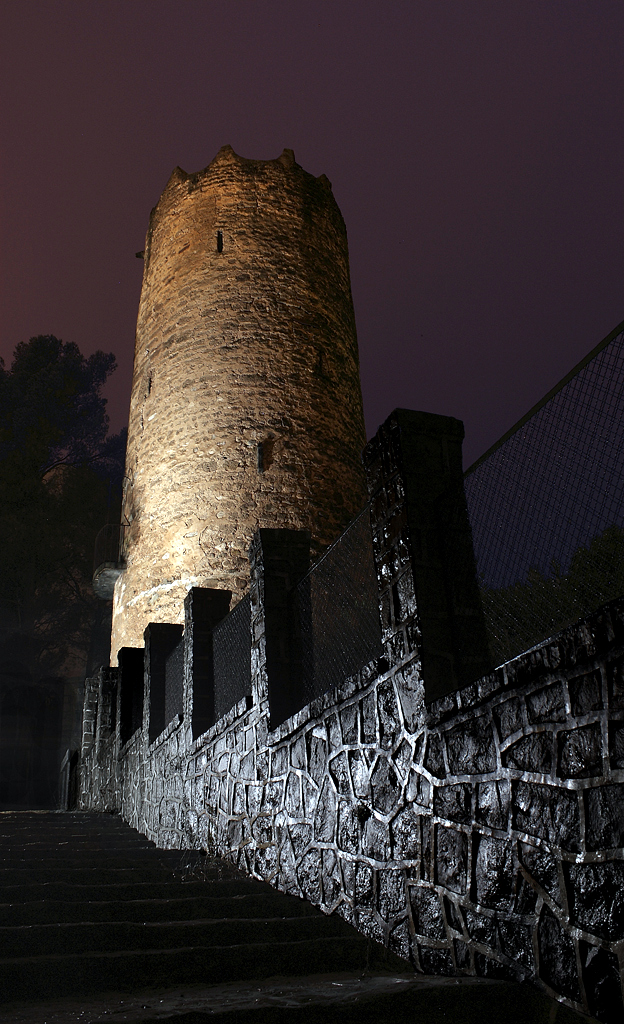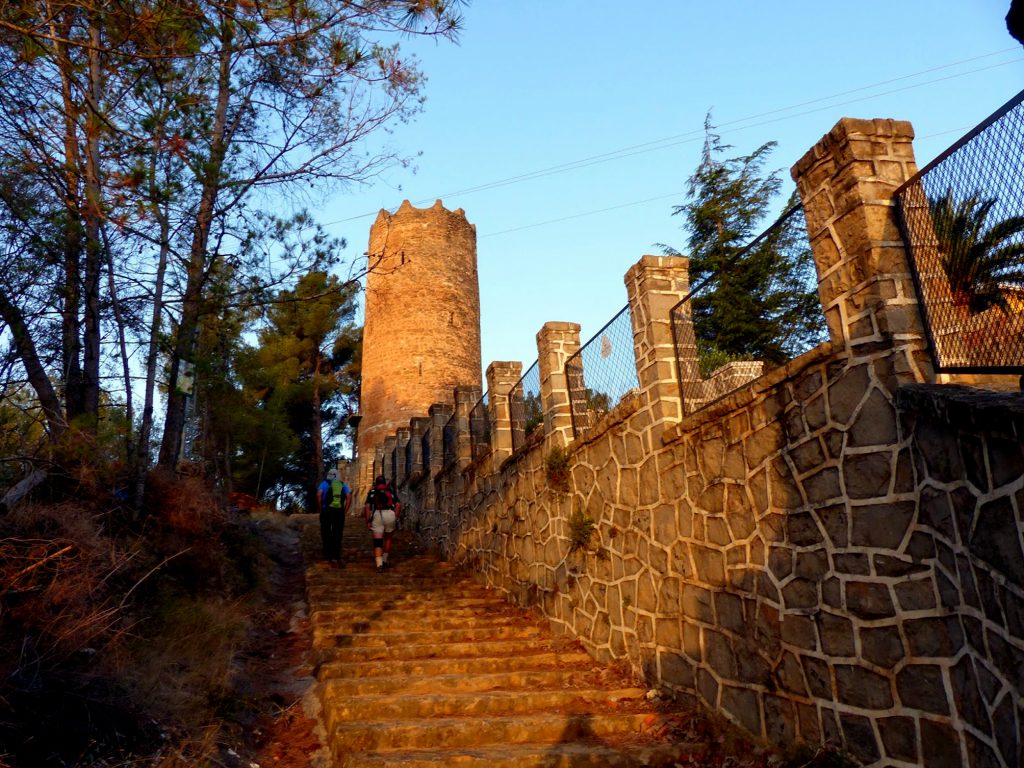
Listed as a Site of Cultural Interest by the Directorate-General for Artistic Heritage of the Valencian Regional Government, the Altomira Tower stands on a hillock on the slopes of Mount Altomira, on private property.
The origins of the tower are uncertain, although there is a hypothesis that its foundations could date back to Roman times, corresponding to a settlement in the area. Later, during the Middle Ages, it would have been a border tower linked to Segorbe Castle. It should be noted that from the 10th century onwards, the Alto Palancia region was divided into two districts, Shariqua (Jérica) in the upper part and Suburb (Segorbe) in the middle part, both belonging to the Taifa of Balansiya (Valencia). In this context, the Altomira Tower served as a watchtower as part of the defensive system of Muslim Segorbe, which at that time headed the administrative district or Iqlim of Suburb. From its position, this tower guarded the valley and the communications hub between this medina and that of Shariqua, both located on the road that ran from the coast to the interior. Thus, from its location, it would have fulfilled a strategic function of communication with other nearby towers (such as the Malpaso Tower in Castellnovo) strategically located and all dependent on the castle of Segorbe.
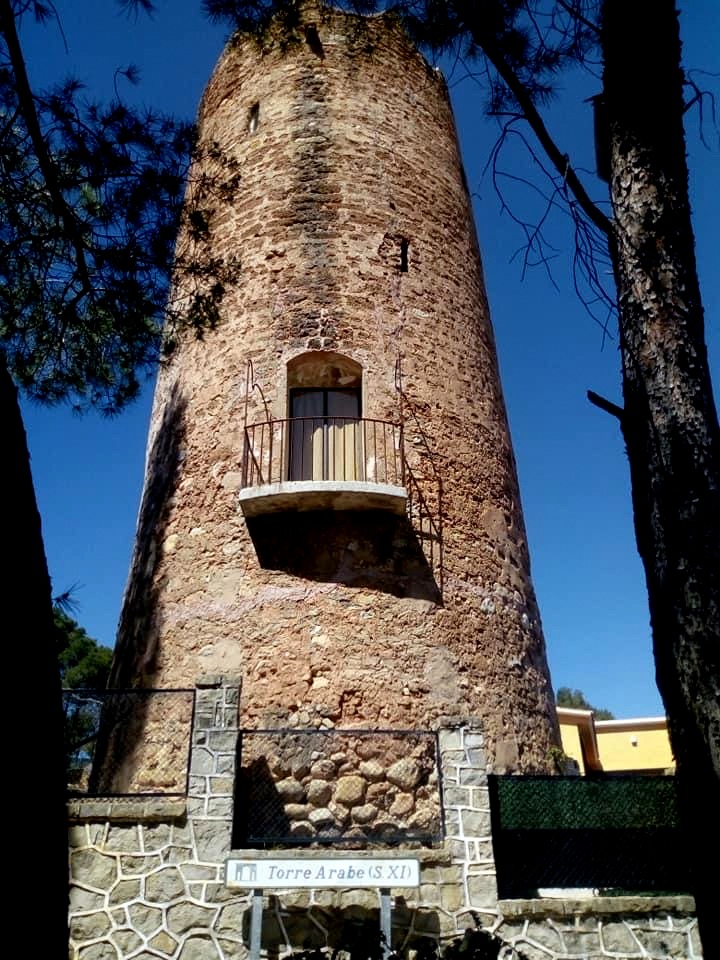
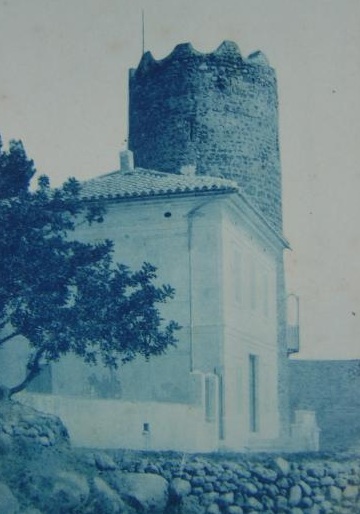
From an architectural point of view, this is a circular tower with a truncated cone shape and crown-shaped battlements at the top. It stands 17 metres high at its highest point and 15.50 metres at its lowest, adapting to the slope of the hillside. Its perimeter is 21 metres at the base and 18.20 metres at the top. It is built with river pebbles of different sizes and lime mortar with small stones up to the first floor, from there on it is combined with rough stone blocks and the same mortar. The tower has a ground floor, three upper floors and a crowning terrace. The top two floors have eight loopholes or small windows, the first four facing the cardinal points and the upper ones covering the spaces between them to cover areas without visibility. It should be noted that the balcony on the first floor is not original; it was added to the tower wall at a time when there was a house attached to it, which was used as a room.