It is held on the weekend closest to the 17th of January.
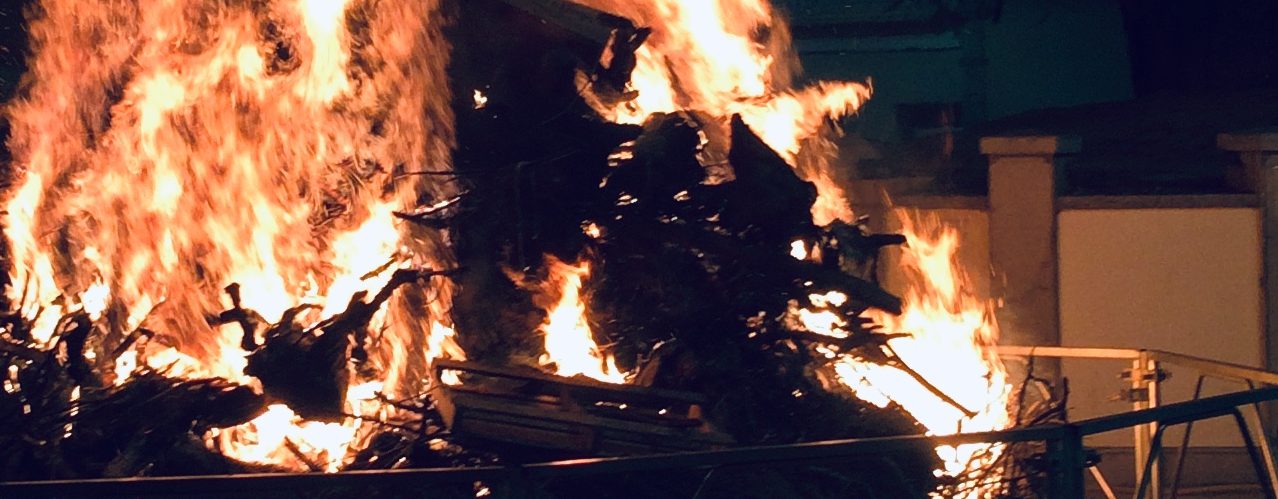
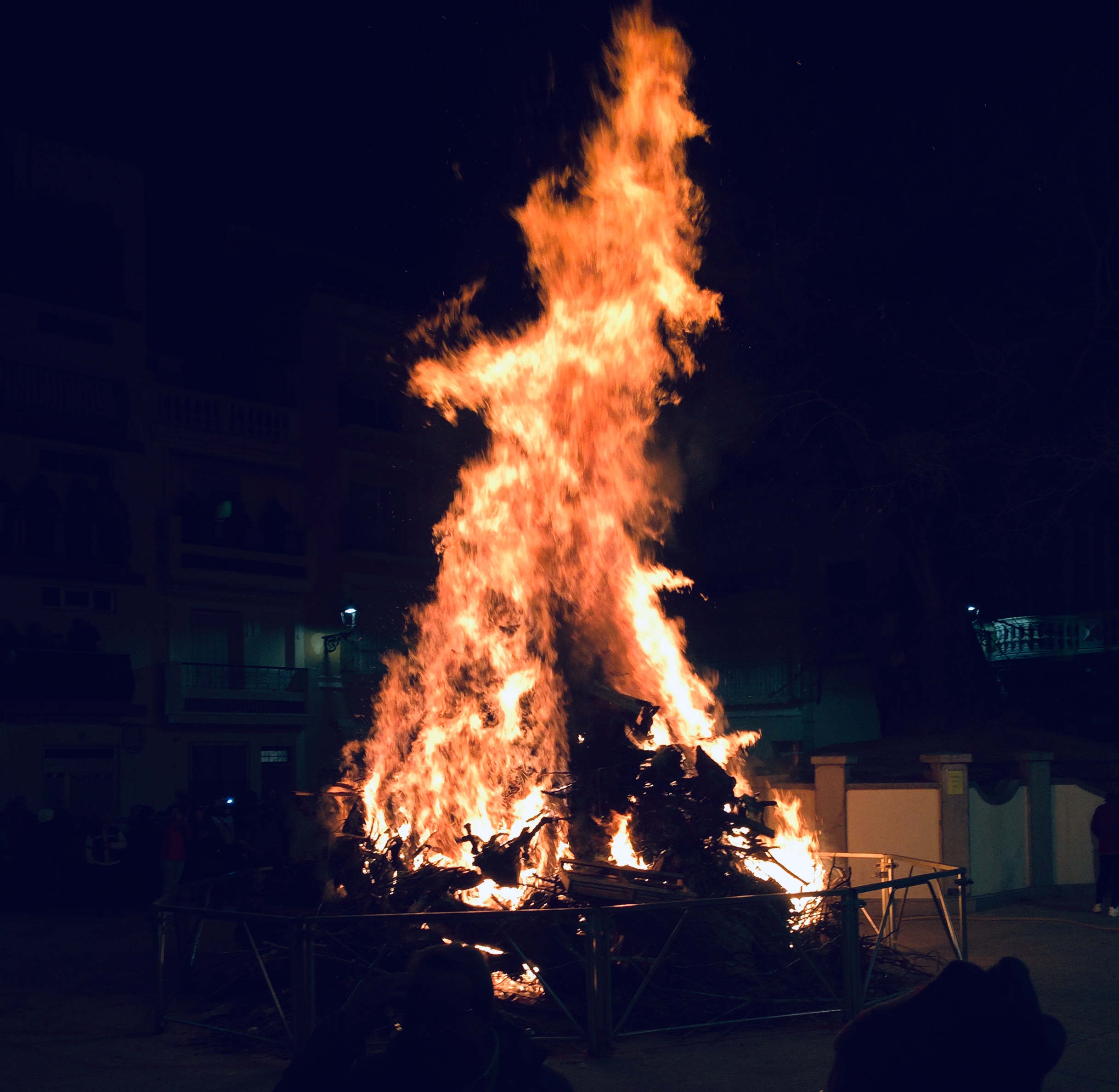
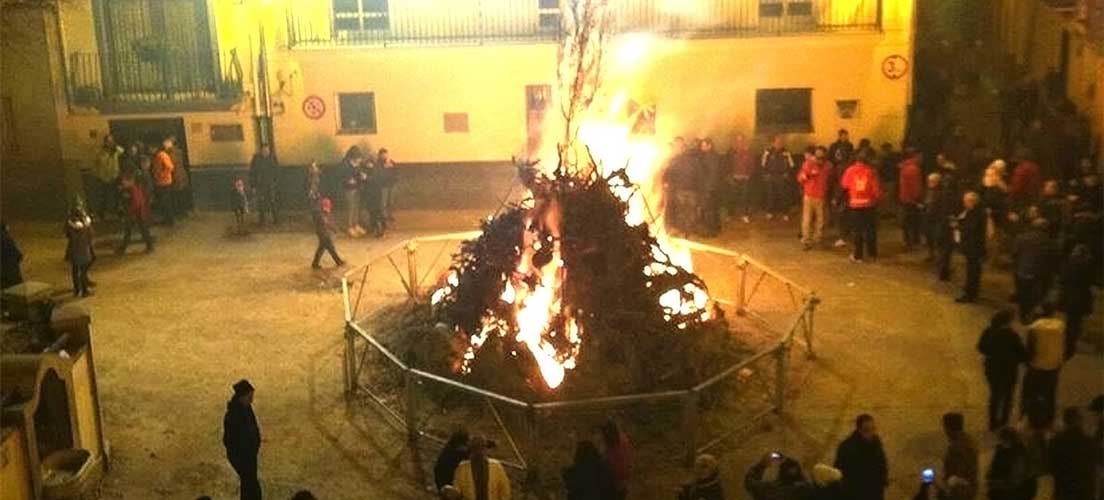
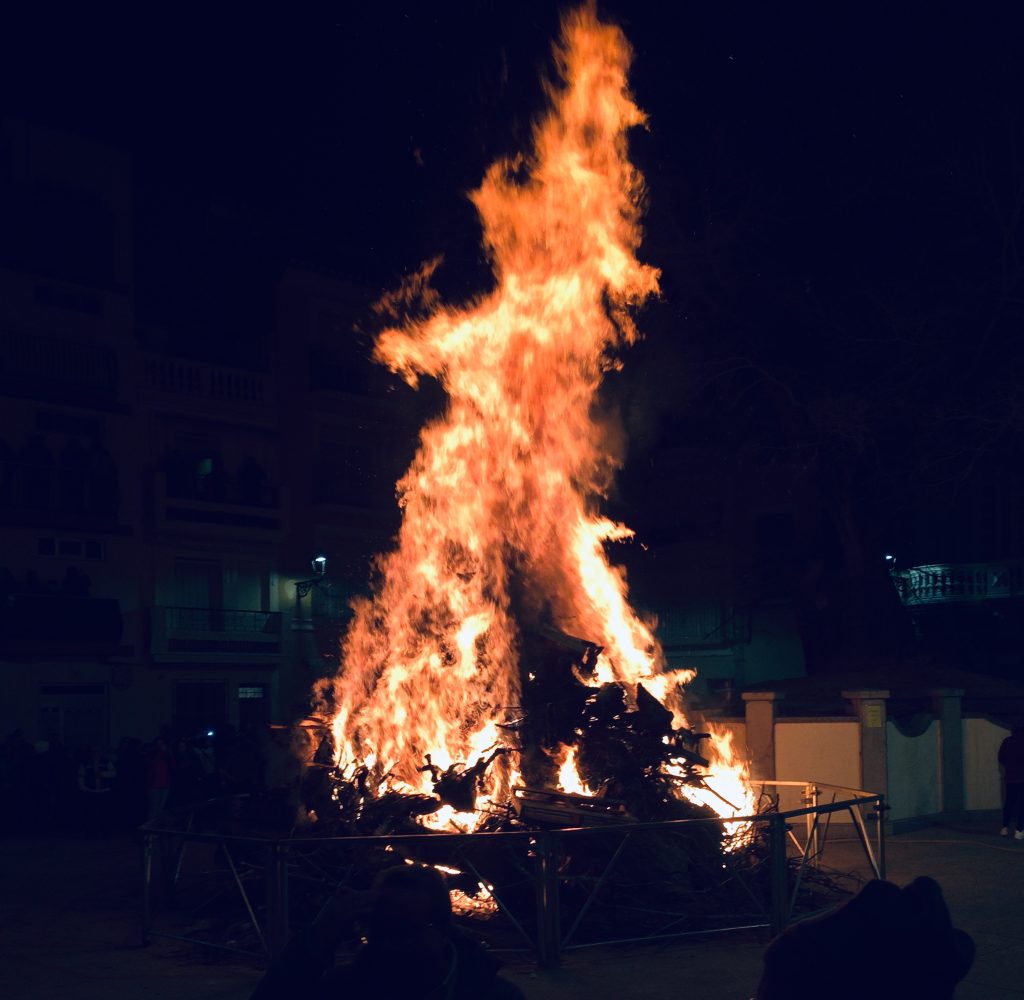
These are the popular festivities in honour of the patron saint of the town, Saint Anthony Abad. There is evidence that they were already celebrated in the 19th century, with different festivities such as parades, horse races along Ramón y Cajal street, “cucañas”, “palo enjabonado” and sack races in the Elm Square, as well as bullfighting in the streets and religious celebrations. However, the most distinctive feature was the bonfires in the streets. In each street, groups of neighbours would make a ‘falla’ around which they would gather and celebrate this winter festival, the young people would go through all the streets of the town and jump over the bonfires as a purifying ritual, but also as a form of amusement. The bonfire that is lit in the Elm Square remains from that tradition, although recently some of the villagers are reviving the old custom and lighting small bonfires in front of their houses.
The festival is currently made up of recreational and religious festivities. The former is organised by a Festivities Commission, set up each year to channel the activities. They begin on Friday night with the lighting of the bonfire by the queen of that year’s fiestas, located in the centre of the Elm Square, after which the groups of friends gather around it for a brotherhood supper. At around midnight, the bull, known as the ‘embolao’ or torch-bearing bull, is carried out. On the following two days, the entrance of the bulls is the act that starts the bullfighting festivities of the day. It is always held at two o’clock in the afternoon, with the launching of a rocket that signals the start of the bullfighting festivities and follows a route through the streets of San José, Mayor, Church Square and Elm Square.
Once the bulls have been collected, they are released one by one through the streets of the town centre, where the most daring bulls give passes to the animals or run-in front of them. At midday a popular meal is held with the typical local dish, the ‘olla navajera’, which is open to all those who contribute to the fiesta fee, who are given a ration.
In the evening, the groups of friends gather in the Elm Square next to the bonfire and the famous ‘turrá del puerco’ is held, where people roast the meat that the commission previously distributes in portions along with bread and wine. A series of night-time verbenas liven up the night and are well attended by the groups of friends and the young people who gather in the Municipal Auditorium. To close the festivities, a ‘chocolatá’ is offered on Sunday afternoon to enjoy the last hours of the fiesta, which closes with the departure of the livestock.
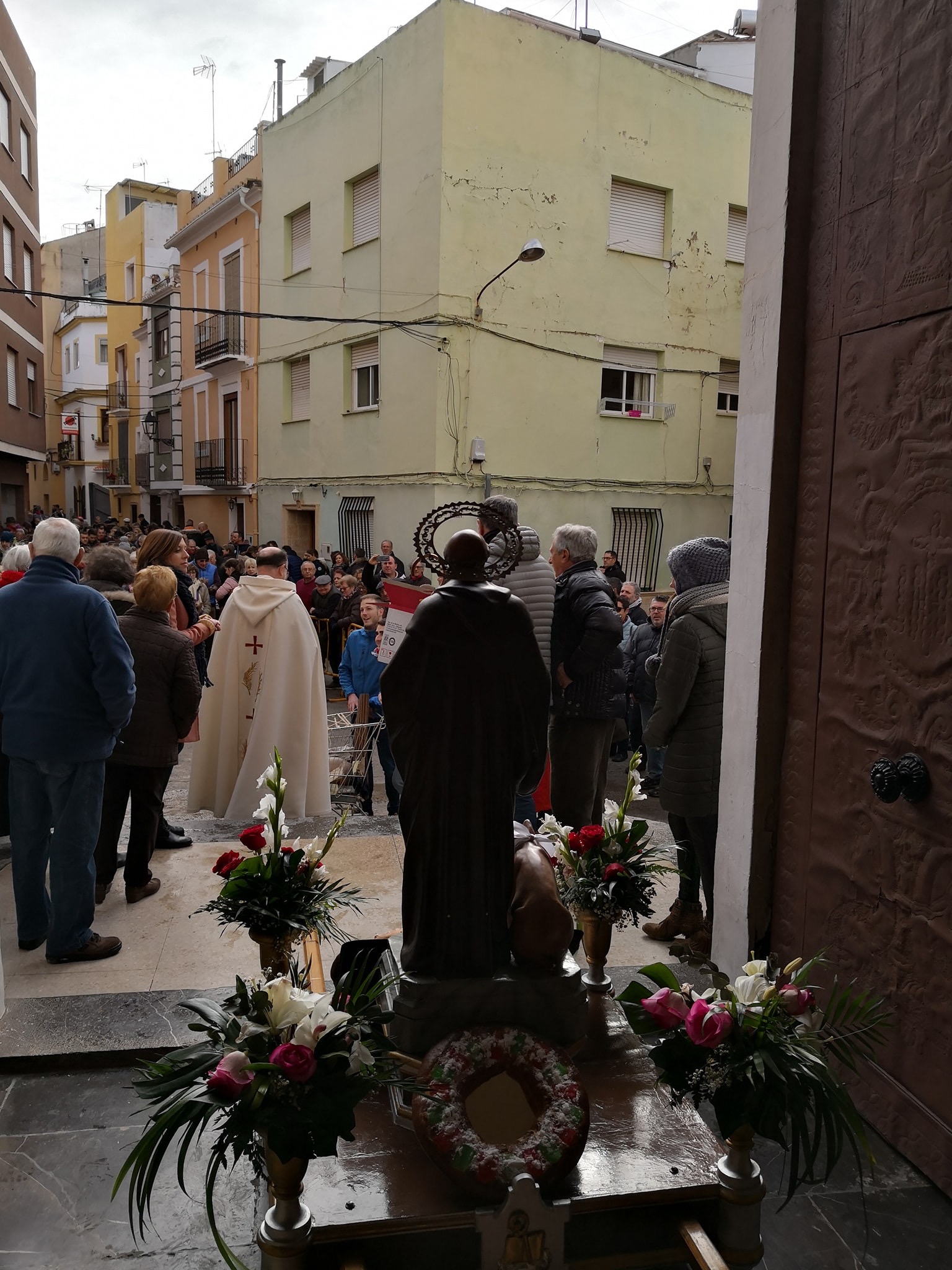
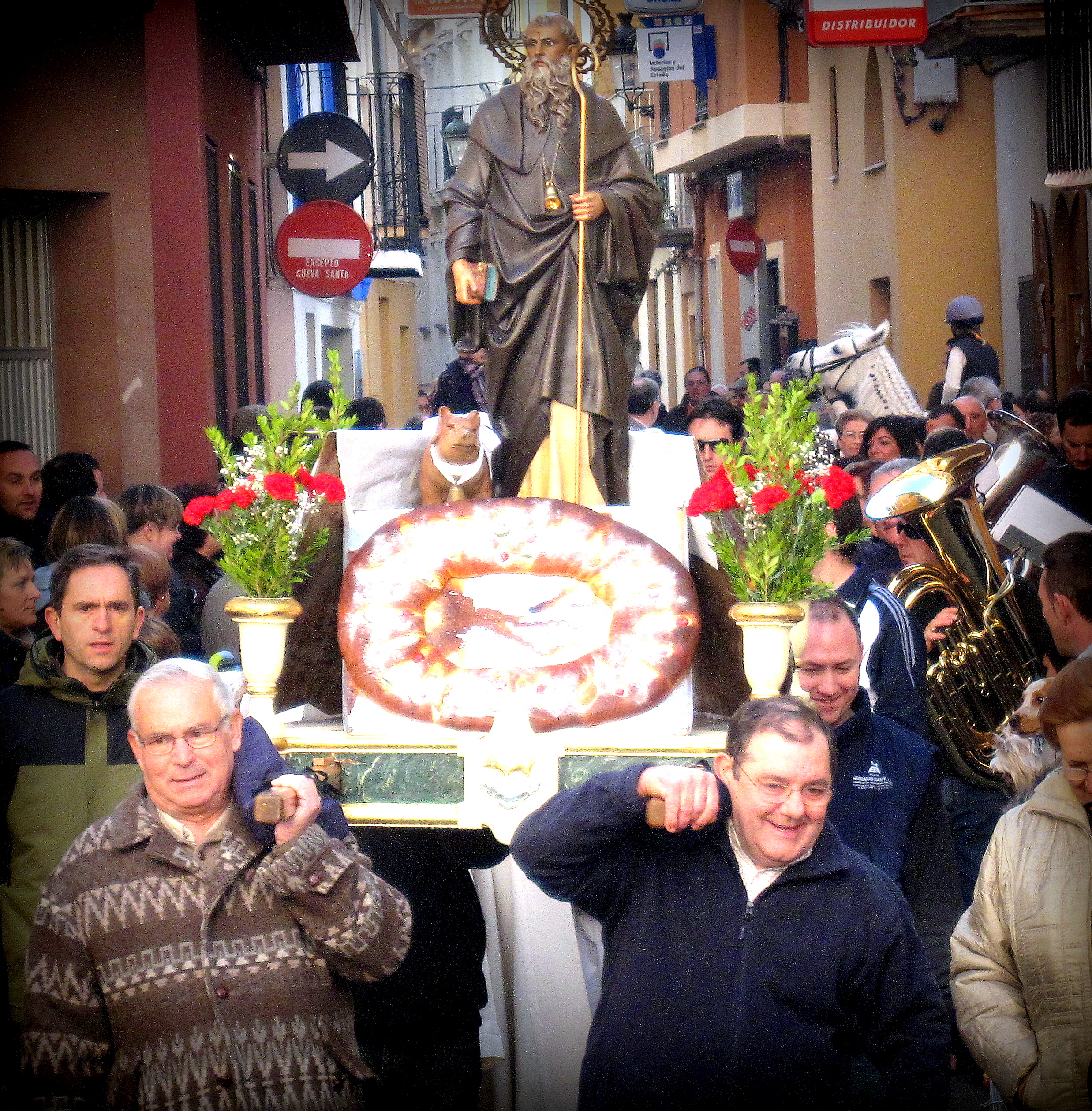
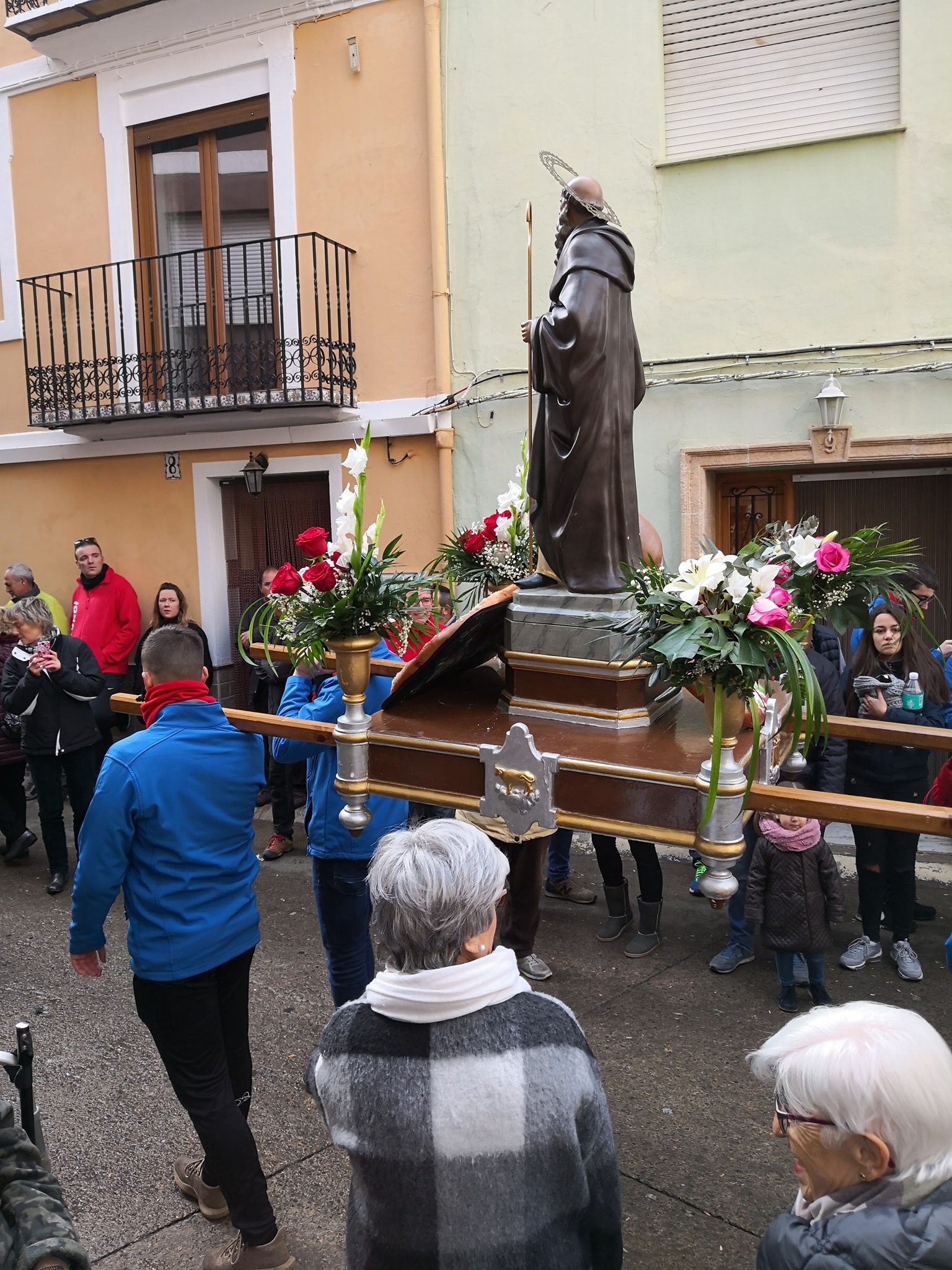
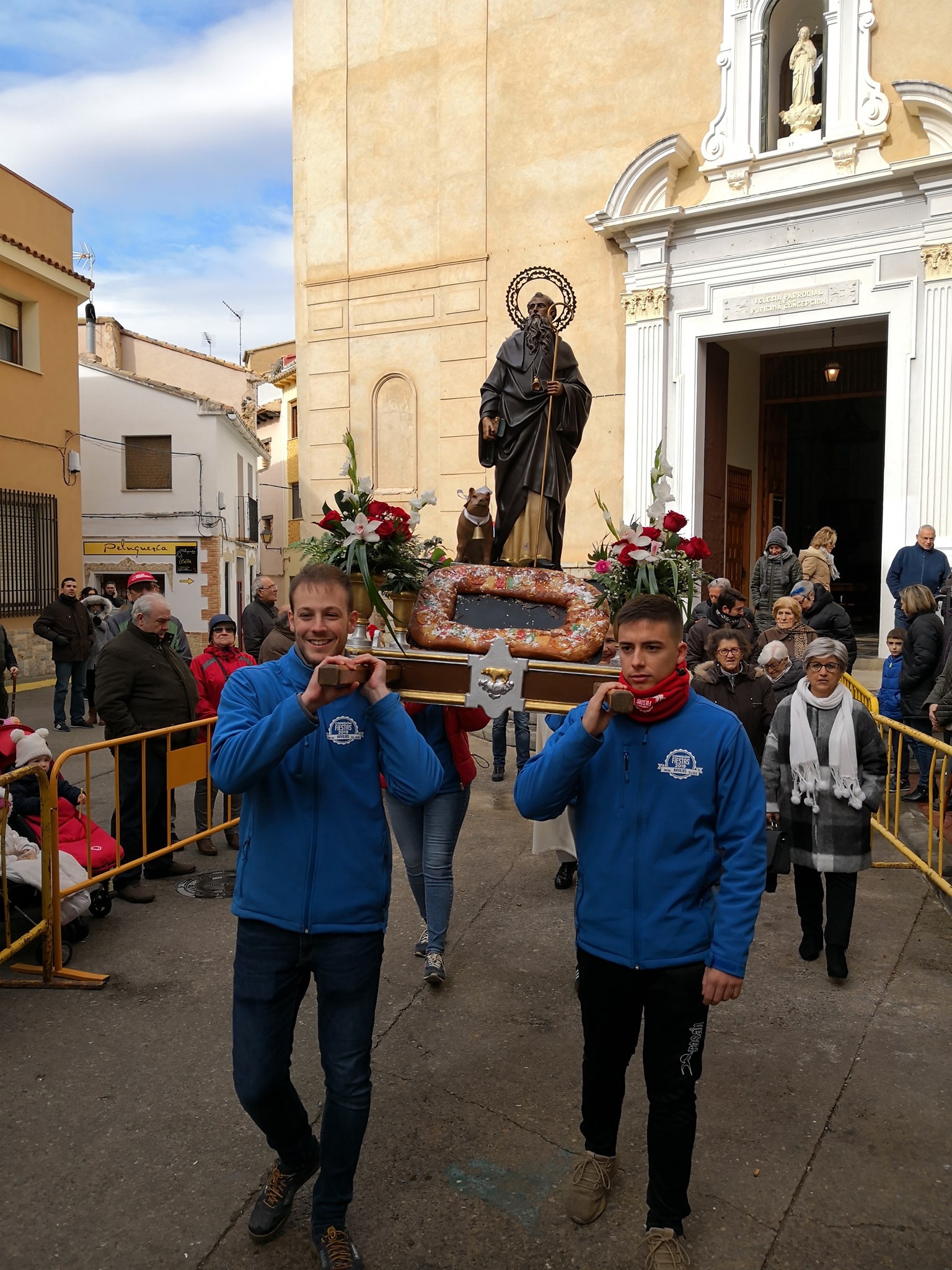
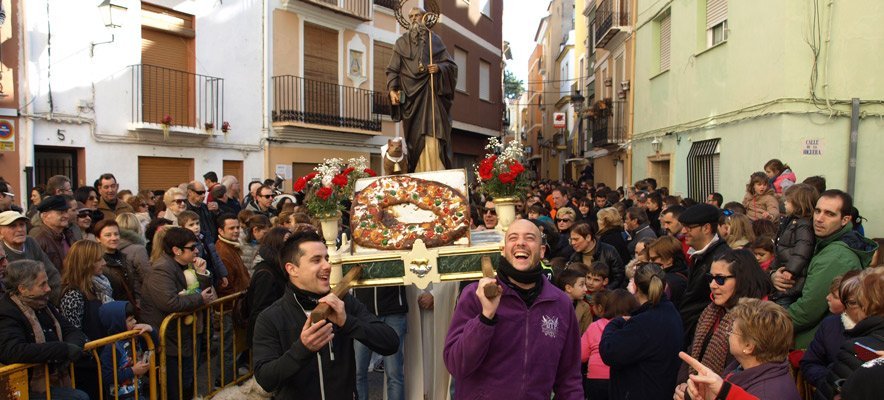
On the other hand, the religious part focuses on two specific acts: the mass dedicated to the patron saint with the presence of municipal authorities and the festivities commission. Once the mass is over, the procession of Saint Anton takes place with the ‘rollo’ carried by the young men of that year’s festival committee. This is followed by one of the most endearing and participative acts, the blessing of the animals at the door of the church, where the owners go with their pets and are given a blessed ‘rollico’ for each animal. Saint Anton, as he is known in Navajas, was a very popular saint, both in the town and in the region due to his links with livestock, as he was the protector of animals, and there was not a farmyard without a picture of the saint.